Game Republic Student Showcase Winner
3rd Place Award for Game Level Design
3rd Place Award for Game Narrative Design


Game Summary
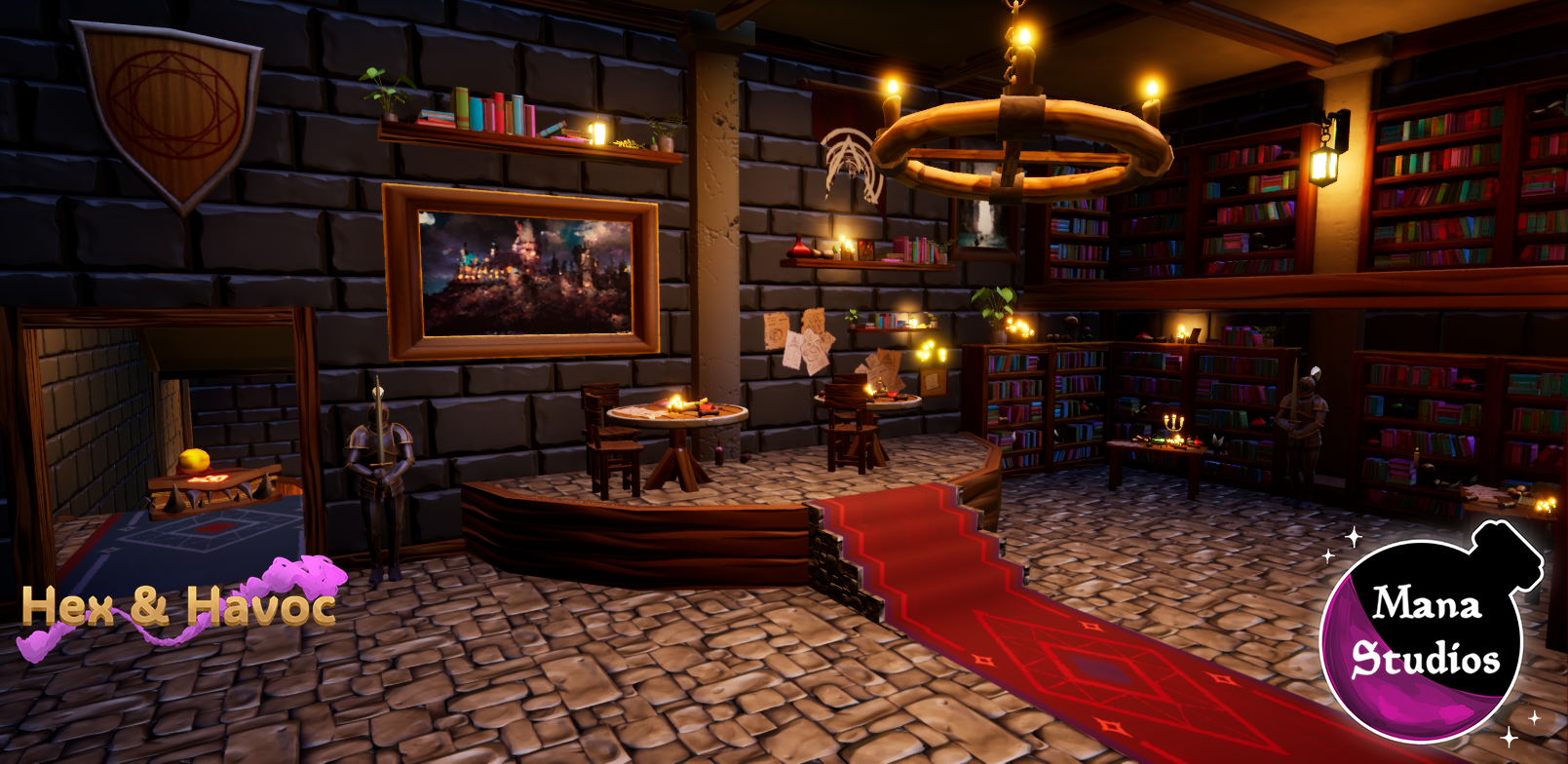
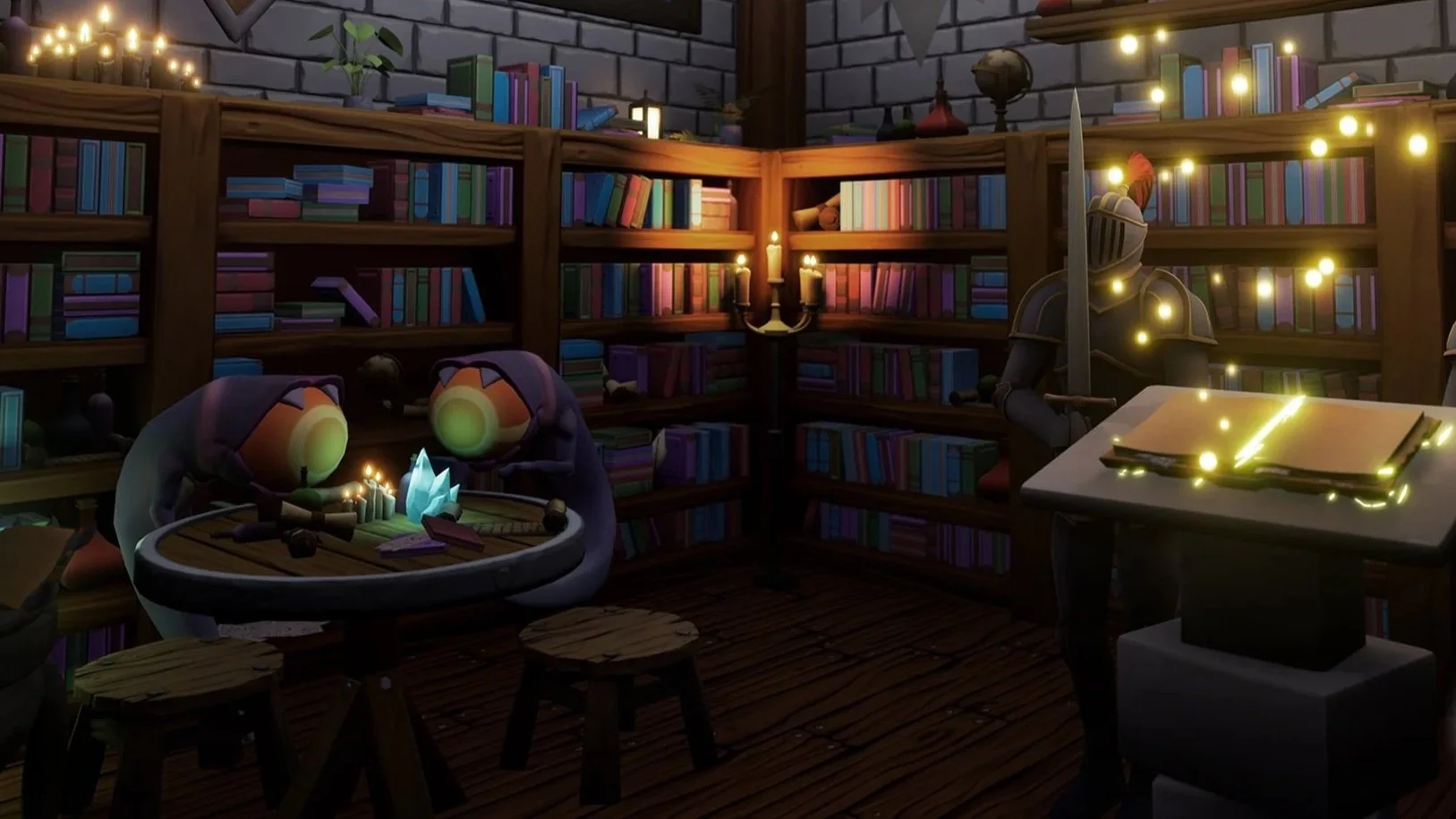
Hex & Havoc is a first-person shooter themed in a magical fantasy school called Spellfast, where you play as a student fighting their way through waves of monsters.
Commanding lightning & fire you can control battles featuring four different enemy types, each with unique mechanics.
To encourage exploration, there are also plenty of collectable notes scattered around the library, finding them builds a narrative about the world. These collectables are paired with fully-voice acted interactions that further support that overarching themes.
This game supports play with controllers, featuring full haptic feedback. Design decisions were supported by player testing groups, giving the team points of focus to make sure it was competition ready!
This was a University project involving four designers & four artists. During the first week, team members pitched ideas for this collaborative project, we looked at our personal strengths and weaknesses. From what we could tell, members of the design side were average in Unreal Engine blueprints, and our artists all specialised in character art.
It was clear we would need to widen our skillsets as a team to succeed.
We landed on the idea of Hex & Havoc because it would lead to a manageable allocation of tasks and preferences. Gameplay inspiration was from Doom Eternal & Immortals of Aveum, looking at design techniques used to develop engaging FPS gameplay.
The initial plan was to create a player character who could shoot spells, then allocate an enemy each to the designers. When the enemies were working well in a test environment, the artists would then create high fidelity character models.
Project Planning & Pre-Production
Explore the Miro documentation!
The team used a Miro Board to document and plan the project, this board shows the joint resources of eight people!
Week-to-week development for this project was recorded by having weekly team meetings. We would have a stand-up, then discuss what we wanted to focus on in the following week. Often these meetings would lead to brainstorming sessions and new ideas, but would also highlight when individuals were struggling and needed extra help.
I was the individual with the most experience in-engine out of anyone on my team. So I spent a lot of time prototyping and implementing mechanics as my role within the team.
I took extra care to make sure that everyone’s work was implemented and represented within the project. Being consistent and reliable was my main focus point for individual growth. For a designer in a team setting, I think these attributes help build trust in my ability.
Development Workflow
My responsibilities during the project!
Set up version control using GitHub, as well as guides on how to use
it for team members who weren’t familiar.Set up the Unreal Project, file structure, levels & sublevels, project settings.
Developed the core mechanics for the first-person playable character.
Fully developed the Bookwyrm and Exploding Book enemies.
Assisted development for the Knight enemy. (animation retargeting & death effects)
Took over development of the Golem enemy, adding new abilities, a weak point, and turning it into a boss.
Added level streaming, checkpoints, enemy arena/spawning logic.
Imported art assets, adjusting pivots and collision when necessary.
Whiteboxed the largest portion of the playable level, ready to be used with the modular kit.
My level sections from the Full Gameplay Footage: 2:55 - 6:55 &
9:00 - 10:54 Equating to 5:54 of 10:54 minutes of overall gameplay.Designed outputs such as: gameplay loops, player character design, level design, enemy design, moscows, video development logs, etc.
Fixed bugs and issues using ‘stat’ commands to find performance bottlenecks, vastly improving project FPS and stability.
Tools Used








Project Logistics


Team Size
Platform
8

Duration
PC/Console
10 Weeks
Design & Prototyping
Designing enemies for ranged combat
The player character in Hex & Havoc has two spells, a lightning bolt (instant, low damage, single-target) and a fireball (slow, high damage, multi-target).
With the players spells in mind, I wanted the gameplay to have a balance of enemies that keep the encounters dynamic throughout. This led to the creation of four enemy types which fulfil specific purposes. This section highlights the Bookwrym, a flying enemy introduced early in the game.
Concept Stage - During the concepting stage, the Bookwrym was intended to be the first flying enemy introduced in the game. It was to be placed in encounters to incentivise players to start thinking about and using the cover provided in levels.
Breaking line of sight, or shooting it with lightning would stop it from charging up a laser beam attack on the player. While weak on its own, if sat far in the back of a tricky encounter, it could consistently shoot at the player chipping away at health.
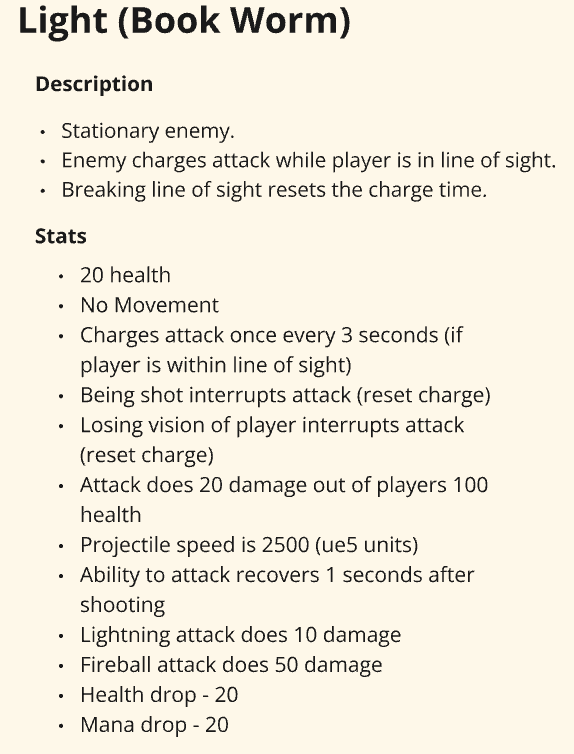
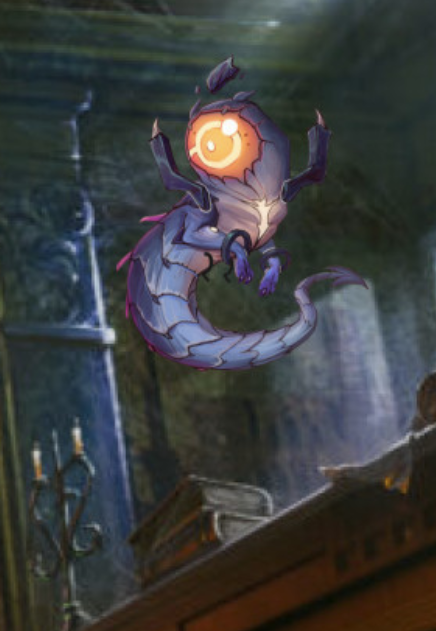
Prototyping Stage - The basic concept has been implemented into engine. From testing, the gameplay feels strong, but may need a fair few tweaks to start feeling fully polished.
Examples of such tweaks are:
- The projectile speed felt a little bit too fast.
- The enemy itself needed to be scaled larger, otherwise it would be very hard to hit at distance (where the player is the most of the time).
- It could potentially have a little bit of movement, moving from Point A to Point B as an evasive maneuverer.
Polished Stage - The Bookwrym now has its art assets implemented, and any bugs have been fixed. Other than small changes the enemy is ready to populate gameplay and is fun to fight against.
Feedback from testing has been considered, leading to changes (such as movement and projectile speed). From here, adding polish such as VFX, SFX, ragdoll physics and more brings it all together. The game now has a cute but deadly enemy!
With prototypes for the player character and enemies being far into development, it was time to start creating a playable level.
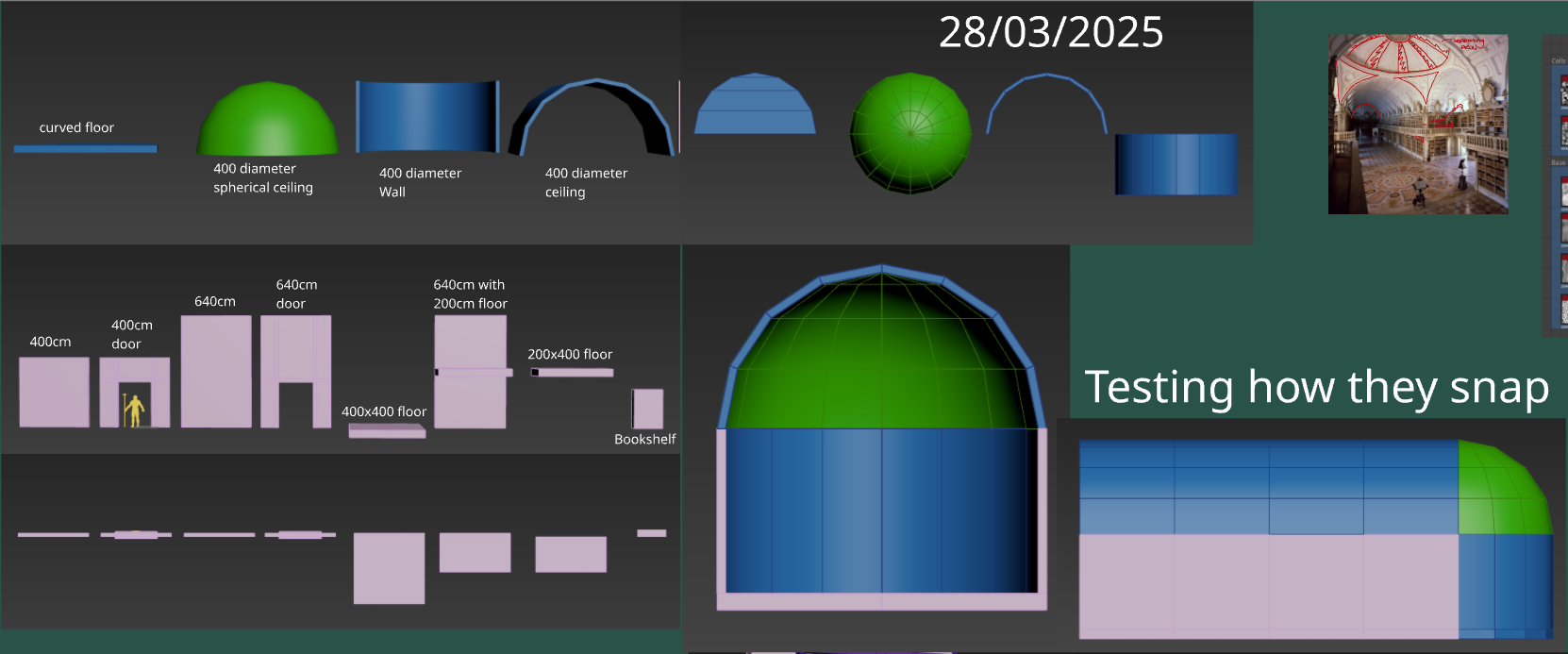
A modular kit was developed that designers used to create various different room shapes, with the sizing’s of the modular pieces being referenced when drafting level designs on paper.
It was structured with different levels of intensity and the onboarding process in mind. The idea being, players will need time to adjust to moving and shooting, while still introducing new exciting things every couple of minutes to keep the player interested.
My section of level introduces two flying enemy types, involving a grand archive, a low-intensity reading nook, and the second arena. Later in the project, I also needed to create a final boss room and implement arena logic within other team members level sections.
Level Design
Concept Stage - When first putting pencil to paper, I knew the overall level would be set in a library/school and how the player/enemies would interact.
What I wanted was an appropriate area to introduce flying monsters, so something I associated with the theming was ‘Grand Archives’. Vastly massive and tall sections of library with balconies and ladders displaying a truly impressive collection of knowledge.
In this archive, flying enemies can fly above the pits showing their ability, being a natural place to find such creatures. Players can then use the pillars holding the balconies up as natural cover to break the line of sight of the Bookwyrms.
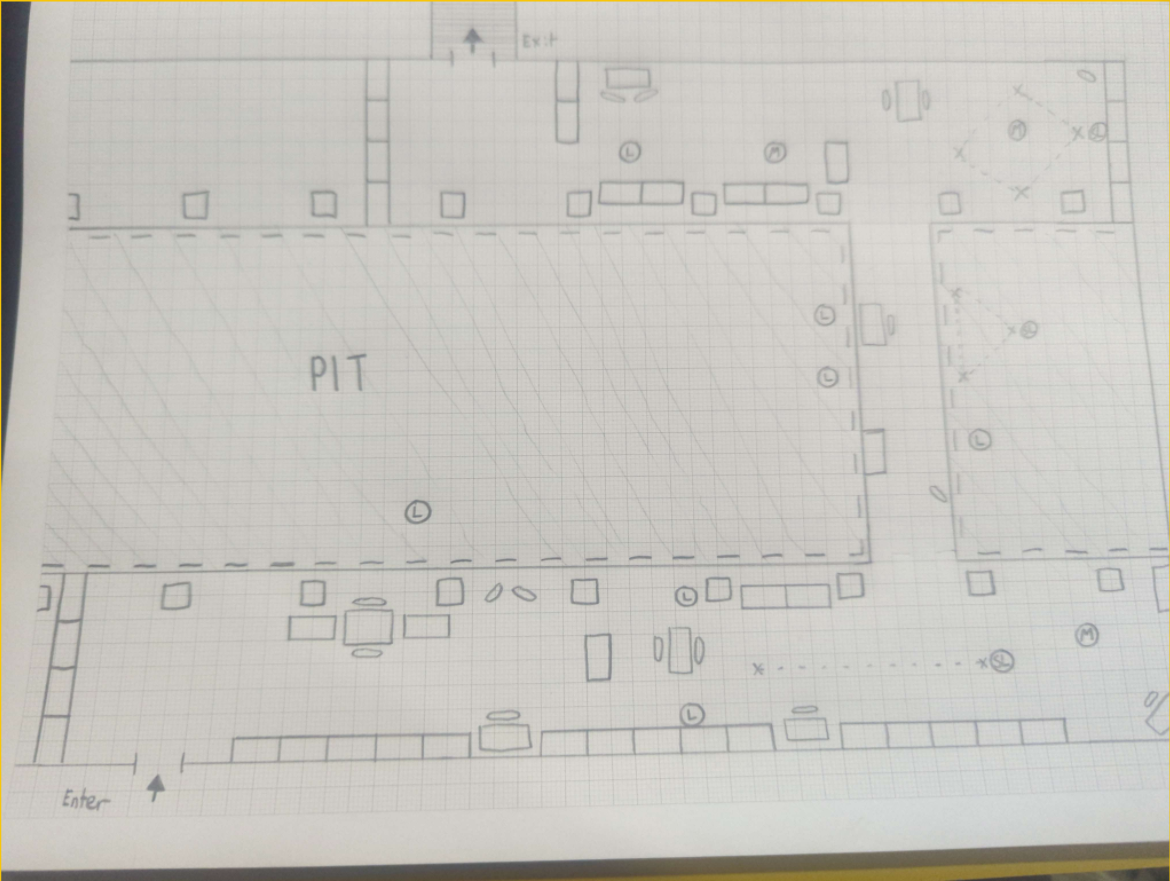


Blockout & Testing Stage - Now that a rough plan is drafted in concepting, an area can be built using the blockout tools in Unreal Engine. Everything that would be built using the modular kit was snapped to grid.
With a functional blockout ready, the enemies could be placed and iteration would begin to make the gameplay experience and level more enjoyable.
When the gameplay encounter feels good enough and is validated by some testing, this stage is finished and the level goes over a final pass.
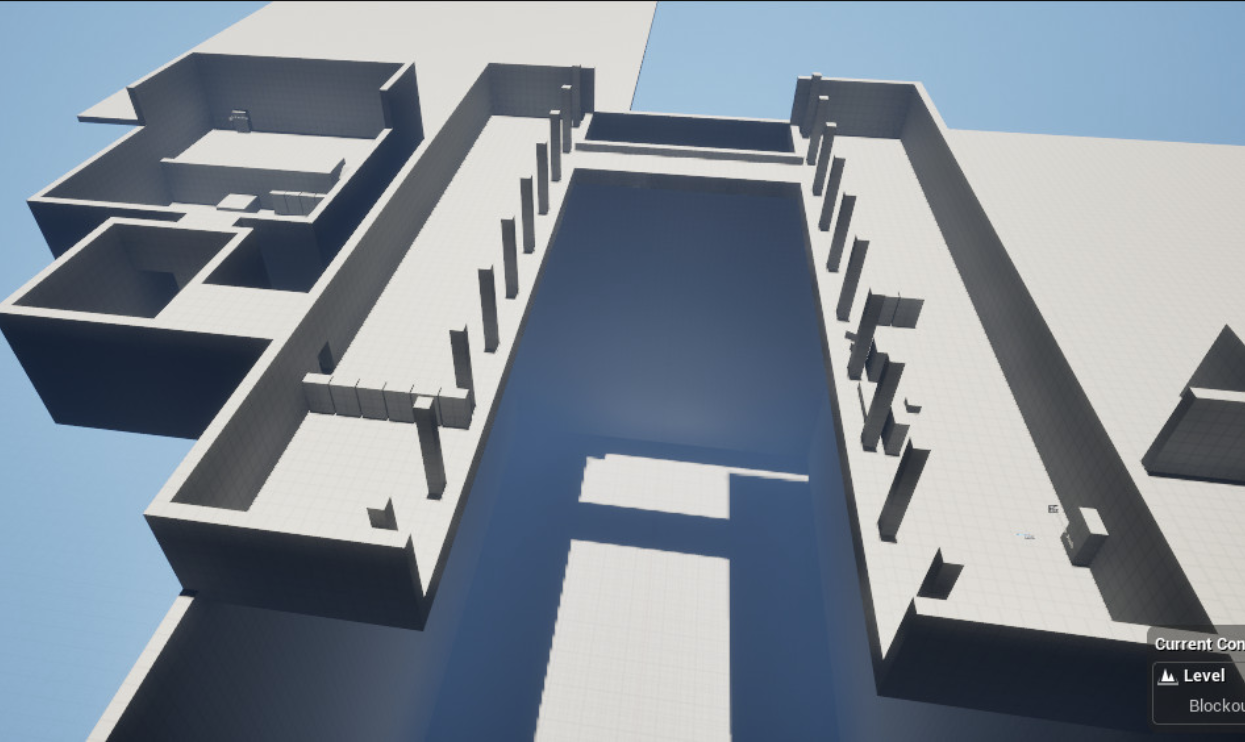
Collision Polish & Art Pass - With the gameplay elements of the blockout finished, the final pass adds collision volumes and art to smooth out any rough edges and make the level visually appealing.
I personally added arena logic, fixed any issues with the nav mesh, added collision volumes such as slopes to stairs to make movement smoother and added props/textures such as decals in some areas to assist the art team when close to deadlines!
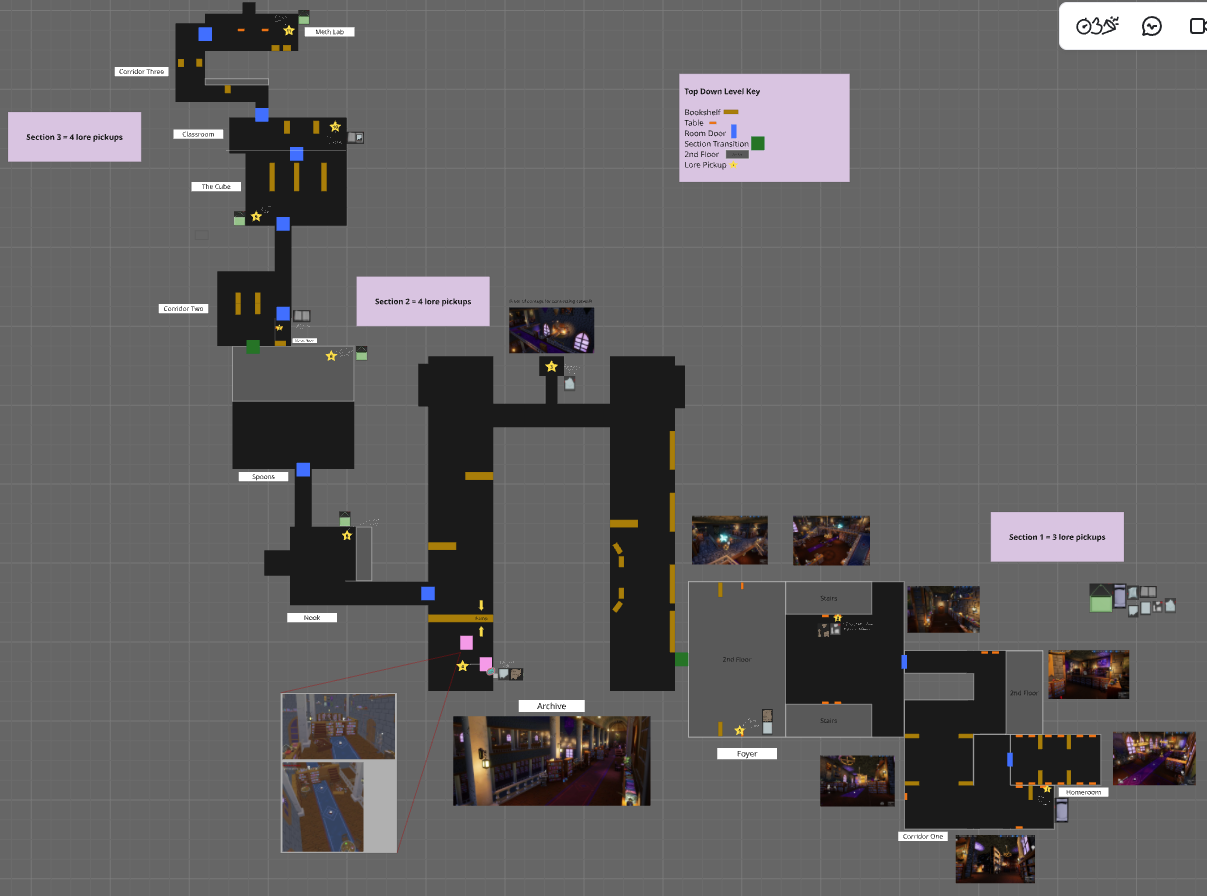
Later in the project collectables were added to each area to support the narrative, which required a couple of level changes to find appropriate spaces, below is a collectable map we made for the game.